%20transp.png)
Can IVF Treat Endometriosis and Infertility?
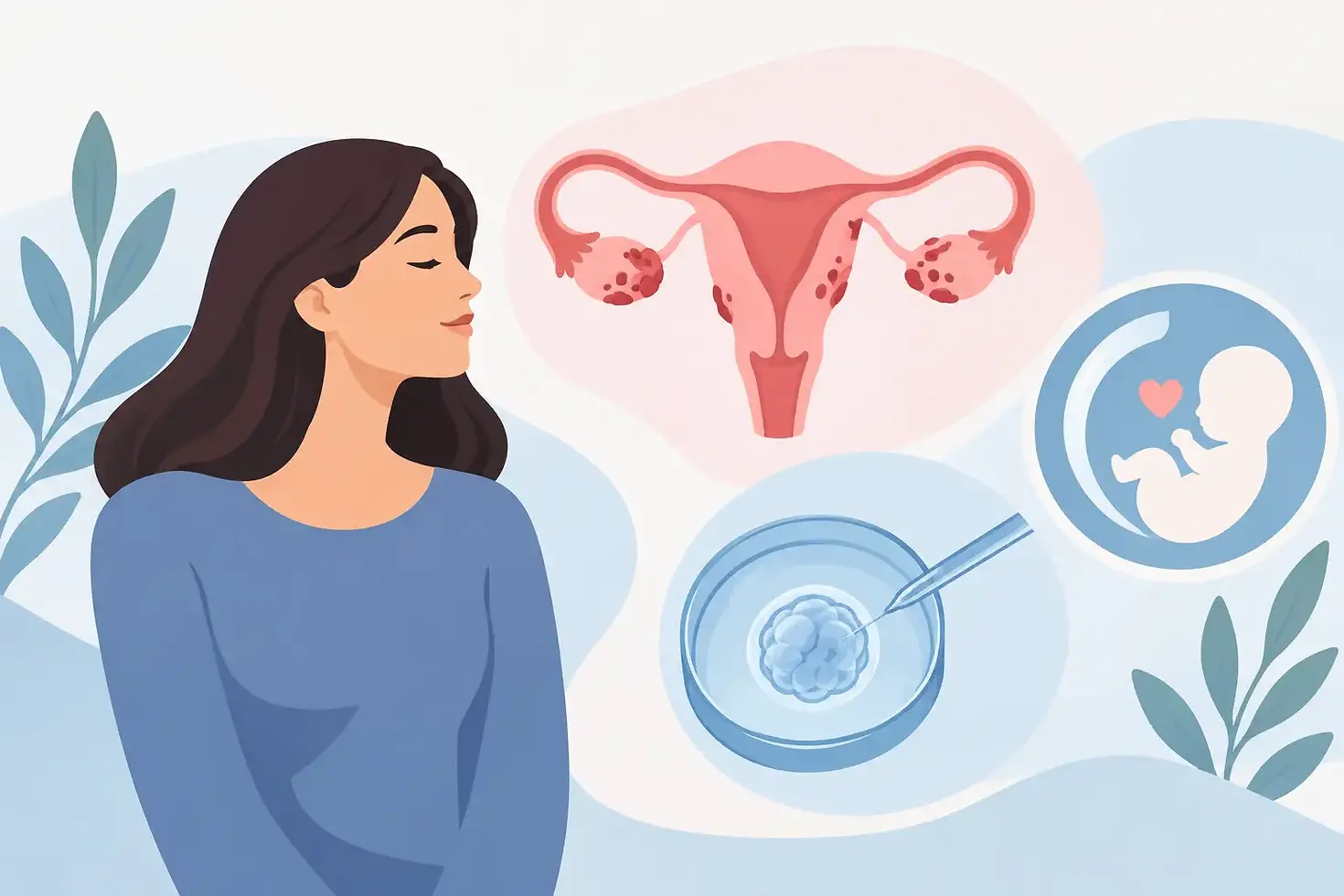
For many people with endometriosis, the question is not simply whether they can become pregnant. It is whether they can do so without losing more time to pain, unsuccessful treatments, or uncertainty. Can IVF treat endometriosis? IVF can help overcome the fertility barriers endometriosis may create, but it does not remove or cure the disease itself. Understanding that distinction can make the next decision clearer.
Endometriosis is a condition in which tissue similar to the uterine lining grows outside the uterus. It can cause pelvic pain, painful periods, pain with intercourse, bowel or bladder symptoms, and difficulty becoming pregnant. Yet symptoms and fertility do not always move together. Someone with significant pain may conceive without assistance, while someone with mild or silent endometriosis may face unexpected infertility.
Can IVF Treat Endometriosis?
IVF is a fertility treatment, not a treatment that eliminates endometriosis lesions. During IVF, eggs are retrieved from the ovaries, fertilized in the laboratory, and resulting embryos are transferred into the uterus. By bringing eggs and sperm together outside the body, IVF can bypass several problems associated with endometriosis, including distorted pelvic anatomy, blocked or impaired fallopian tubes, and inflammation that may interfere with fertilization.
What IVF cannot reliably do is stop endometriosis from progressing or provide lasting relief from pelvic pain. Some patients notice symptom changes during hormonal treatment or pregnancy, but those changes are not the same as a cure. Pain management and disease control may require a separate plan involving a gynecologist, pelvic pain specialist, medication, or, in selected cases, surgery.
This distinction matters because treatment should be built around your primary goal. If pregnancy is the immediate priority, IVF may be the most direct path. If severe pain, large endometriomas, or symptoms affecting daily life are central concerns, the fertility plan may need to be coordinated with treatment for the disease itself.
Why Endometriosis Can Affect Fertility
Endometriosis can affect fertility in more than one way. Scar tissue and adhesions may alter the relationship between the ovaries, fallopian tubes, and uterus, making it harder for an egg and sperm to meet naturally. Inflammation in the pelvis can affect egg quality, sperm function, fertilization, or early embryo development. Endometriomas, which are cysts on the ovaries related to endometriosis, can also complicate ovarian function.
The condition may also influence implantation, although this is an area with meaningful individual variation. Not every failed implantation is caused by endometriosis, and not every person with endometriosis needs extensive testing or additional treatment before embryo transfer. A thoughtful assessment looks at the whole picture rather than assigning every fertility challenge to one diagnosis.
Severity on a surgical staging system does not perfectly predict the ability to conceive. A patient with early-stage disease may still have difficulty, while another with more extensive disease may have good egg production and successful IVF outcomes. Age, ovarian reserve, sperm factors, tubal status, prior pregnancies, and the duration of infertility all deserve equal attention.
When IVF May Be a Good Option for Endometriosis
IVF is often considered when endometriosis has affected the tubes or pelvic anatomy, when pregnancy has not occurred after a reasonable period of trying, or when other fertility factors are present. It can also be appropriate when time matters, particularly for patients in their late 30s or 40s, those with diminished ovarian reserve, or those who have already had unsuccessful lower-intensity treatment.
For some patients, IVF offers a clearer path than repeated timed intercourse or multiple cycles of intrauterine insemination. This is especially true if both endometriosis and male-factor infertility are present. IVF with ICSI may be recommended when sperm factors suggest that fertilization could be reduced, although ICSI is not automatically necessary for every patient with endometriosis.
There are also situations where IVF is not the first or only answer. A younger patient with minimal disease, open tubes, reassuring ovarian reserve, and a short history of trying may reasonably consider expectant management or other options first. The best approach depends on the likelihood of success with each path and how much time feels acceptable to you.
Does Endometriosis Lower IVF Success Rates?
Endometriosis can affect IVF outcomes, but it does not mean IVF will not work. Many patients with endometriosis produce healthy eggs, create viable embryos, and have successful pregnancies through IVF. The impact varies based on age, ovarian reserve, the presence and size of endometriomas, prior ovarian surgery, sperm quality, embryo quality, and uterine factors.
One concern is that endometriomas or prior surgery to remove them may reduce the number of eggs available from an ovary. Surgery can be medically necessary in some circumstances, such as a suspicious mass, severe pain, or a cyst that limits safe egg retrieval. But surgery before IVF is not automatically beneficial and may reduce ovarian reserve. This is a decision that deserves careful, individualized judgment.
Embryo testing with PGT-A may be considered for some patients, particularly when age-related chromosome concerns or a history of unsuccessful IVF is present. It does not treat endometriosis, improve egg quality, or guarantee implantation. Its role is to provide information about embryo chromosome status and help guide transfer decisions in the right clinical setting.
Is Surgery Needed Before IVF?
Not always. This is one of the most important areas where a personalized strategy matters.
Surgery may be recommended when symptoms are severe, imaging raises concern about an ovarian mass, a large endometrioma prevents access to follicles during retrieval, or anatomy needs clarification. However, removing an endometrioma solely in the hope of improving IVF outcomes is not always the right choice, particularly when ovarian reserve is already limited.
In other cases, proceeding directly to IVF can protect valuable time and avoid unnecessary impact on the ovaries. Your physician should review ultrasound findings, AMH, antral follicle count, prior surgeries, symptoms, and reproductive goals before recommending surgery or an IVF-first approach. A plan should never be based on the diagnosis alone.
Preparing for IVF With Endometriosis
A well-organized IVF plan begins with a detailed review of your history. That includes prior laparoscopies, imaging, medications, symptoms, prior pregnancies, previous fertility treatment, and family-building timeline. Both partners, when applicable, should be evaluated so that sperm-related factors are not missed.
Your physician may use ultrasound and bloodwork to assess ovarian reserve and identify endometriomas or other pelvic findings. In certain situations, additional uterine evaluation may be appropriate before embryo transfer. The purpose is not to order every available test. It is to identify findings that could genuinely change the treatment strategy.
Some patients with suspected or confirmed endometriosis may benefit from hormonal suppression before a frozen embryo transfer. Research and clinical practice are not uniform on this question, and the potential benefit depends on the individual situation. Longer suppression also means more time before transfer, so the decision should balance possible benefit with the emotional and practical cost of delay.
Clear communication is particularly valuable when treatment is coordinated internationally. Before beginning IVF, patients should understand which steps can be completed close to home, when travel is needed, what monitoring involves, and who will review results. Continuity with a physician who understands the full history helps prevent a complex diagnosis from becoming an overly complicated experience.
Questions Worth Asking at Your Consultation
A productive fertility consultation should leave you with a plan, not just a label. Ask whether endometriosis appears to be the main barrier to pregnancy or one factor among several. Ask how ovarian reserve, endometriomas, tubal status, and sperm findings affect the recommendation. If surgery is proposed, ask what specific problem it is expected to solve and how it could affect egg yield.
It is also reasonable to ask whether IVF should begin now, whether embryo banking should be considered, and whether there is a role for medication before transfer. The answers may not be absolute, but they should be transparent and grounded in your circumstances.
Endometriosis can make fertility decisions feel urgent and emotionally heavy. A careful plan does not promise certainty, but it can replace guesswork with a realistic next step. The right path is the one that respects both your reproductive timeline and the full medical story behind it.


Comments