%20transp.png)
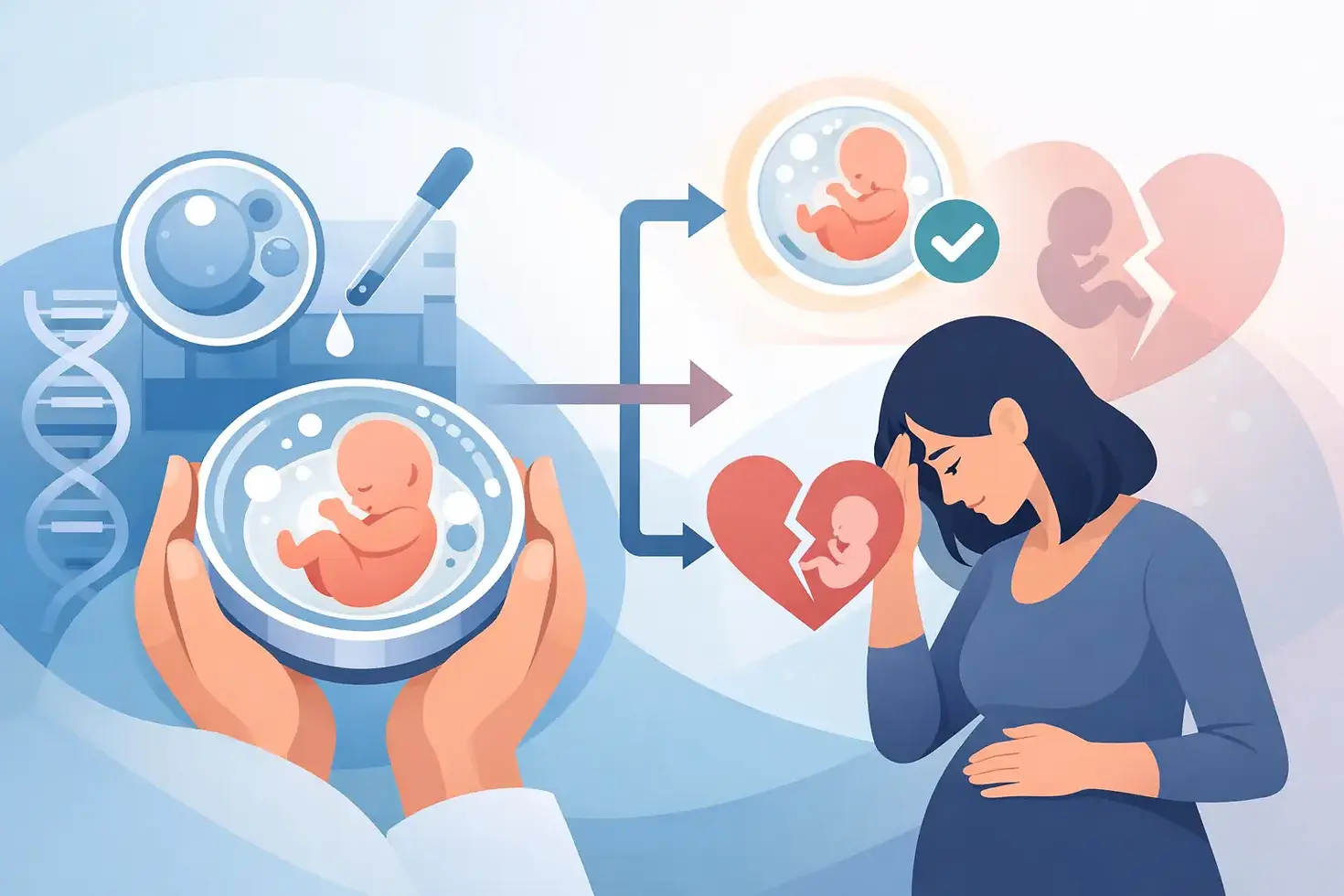
Can PGT-A Reduce Miscarriage?
- Alejandro Aldape Arellano

- May 5
- 5 min read
Few moments in fertility care feel as frightening as seeing a positive test and then wondering if the pregnancy will last. That is why so many patients ask, can PGT-A reduce miscarriage? The short answer is yes, in some cases it may lower the risk by helping identify embryos with the correct number of chromosomes before transfer. But it is not a guarantee, and whether it helps depends on your age, diagnosis, embryo quality, and overall treatment plan.
For patients considering IVF, this question deserves a clear and honest answer. Miscarriage is emotionally painful, and it is also medically complex. A thoughtful fertility team should explain not only what PGT-A can do, but also where its limits begin.
What PGT-A actually tests
PGT-A stands for preimplantation genetic testing for aneuploidy. In simple terms, it looks at whether an embryo has the expected number of chromosomes. An embryo with too many or too few chromosomes is called aneuploid, and these embryos are less likely to implant successfully and more likely to result in miscarriage.
During IVF, embryos are typically grown to the blastocyst stage. A small number of cells are then carefully biopsied from the part of the embryo that will form the placenta, not the fetus itself. Those cells are analyzed, and the embryo can be categorized as euploid, aneuploid, or in some cases mosaic, which means there is a mix of normal and abnormal cells.
The key idea is straightforward. If a miscarriage is caused by a chromosome abnormality, transferring a euploid embryo may reduce that specific risk.
Can PGT-A reduce miscarriage in IVF?
Yes, PGT-A can reduce miscarriage in IVF for some patients because chromosomal abnormalities are one of the most common causes of pregnancy loss, especially as maternal age increases. By selecting an embryo more likely to be chromosomally normal, your care team may be able to lower the chance of transferring an embryo that would stop developing.
That said, miscarriage does not happen for only one reason. Uterine factors, hormone issues, immune conditions, clotting disorders, sperm-related factors, and simple biology can still affect the outcome. A euploid embryo has a stronger chance, but it does not remove every possible cause of pregnancy loss.
This is where realistic counseling matters. PGT-A can improve embryo selection. It cannot promise a live birth from a single transfer.
Why miscarriage risk changes with age
Age is one of the biggest reasons this conversation matters. As egg quality declines over time, the chance of creating aneuploid embryos increases. That means patients in their late 30s and 40s are more likely to produce embryos with chromosomal errors, even when they are healthy and have no obvious fertility symptoms.
Because of that, PGT-A may be especially useful for patients who have a higher likelihood of aneuploid embryos. In those cases, testing can help avoid transfers that have little chance of success and may end in miscarriage.
For younger patients with a strong ovarian reserve and several high-quality embryos, the benefit may be less dramatic. Some will still choose testing for clarity and planning. Others may decide that embryo selection based on development alone is enough. Neither path is automatically right for everyone.
Who may benefit most from PGT-A
Patients with recurrent pregnancy loss often ask about PGT-A first, and that makes sense. If prior miscarriages were related to chromosome abnormalities, testing may help identify embryos with better reproductive potential.
It can also be helpful for patients of advanced maternal age, those with repeated failed embryo transfers, and patients who want more information before choosing which embryo to transfer. In some situations, it may support a more efficient path by reducing the number of transfers needed to find a viable embryo.
Still, there are trade-offs. If only a small number of embryos are available, some patients worry about losing opportunities through testing or receiving uncertain results such as mosaic findings. These are reasonable concerns, and they should be discussed in the context of your full fertility picture rather than as a one-size-fits-all decision.
The limits of PGT-A that patients should understand
One of the most important parts of this topic is knowing what PGT-A does not do. It does not test for every possible genetic condition unless a different form of testing is added for a known inherited disorder. It does not evaluate the uterus, hormone balance, or the overall health of a pregnancy after implantation. It also does not eliminate the possibility of miscarriage from non-chromosomal causes.
There is also the question of mosaic embryos. Some embryos show a mixture of normal and abnormal cells, and these results can be difficult to interpret. In the past, many of these embryos were not considered for transfer. Today, clinics may handle mosaic embryos more carefully, depending on the type and degree of mosaicism and the patient’s available options.
This is one reason experience matters. PGT-A is not just a lab report. It is part of a clinical decision that should be explained with care, accuracy, and compassion.
PGT-A and miscarriage: what the research suggests
When patients search for answers, they often find mixed messages. Some studies show that transferring a euploid embryo lowers miscarriage rates compared with transferring an untested embryo, particularly in older patients. Other studies suggest that the benefit is smaller in younger groups or depends heavily on how outcomes are measured.
Both things can be true. Research in fertility is rarely simple because patient populations are different. A 29-year-old with many blastocysts is not the same as a 41-year-old with a history of pregnancy loss. The value of PGT-A changes based on who is being treated.
The most accurate way to read the evidence is this: PGT-A may reduce miscarriage when the main issue is embryo aneuploidy. It is less useful as a universal solution for every IVF patient.
How this affects treatment decisions
If you are deciding whether to include PGT-A in your IVF plan, the best question is not only can PGT-A reduce miscarriage. It is also, is miscarriage likely to be related to embryo chromosomal status in my case?
That is where individualized care becomes essential. A good consultation should look at age, ovarian reserve, fertilization history, prior miscarriages, sperm factors, uterine evaluation, and how many embryos are expected. Those details matter far more than general statements online.
For some patients, PGT-A offers reassurance and a more informed path forward. For others, it may add complexity without changing the outcome enough to justify it. The right recommendation should feel medically sound and personally appropriate.
Questions worth asking your fertility team
Before moving ahead, ask how PGT-A results would actually change your treatment strategy. If an embryo comes back mosaic, what would the clinic recommend? If you expect only one or two embryos, how does that affect the decision? And if you have had a miscarriage before, what evaluation is being done beyond embryo testing?
These questions help shift the conversation from fear to planning. They also help you understand whether your clinic is offering true personalized care or simply presenting PGT-A as a standard add-on.
At Dr. Alex Aldape, this kind of conversation is part of helping patients feel informed rather than overwhelmed. The goal is not to push every option. It is to build the right strategy for the person sitting in front of us.
A balanced answer to a painful question
So, can PGT-A reduce miscarriage? Yes, it can, especially when miscarriage risk is tied to chromosomal abnormalities in the embryo. That can make it a valuable tool for some IVF patients, particularly those with recurrent loss, older maternal age, or repeated transfer failure.
But it is not a promise, and it should never be presented as one. The strongest fertility plans combine embryo assessment with a careful look at the uterus, hormones, medical history, and the emotional needs of the patient or couple going through treatment.
If you are weighing this decision, you do not need a perfect answer on day one. You need a team that will explain the science clearly, listen closely to your history, and help you choose the next step with confidence and care.


Comments